About

Showing posts with label Technology. Show all posts

Tuesday, 25 June 2013

World’s Largest Cylindrical Aquarium

World’s Largest Cylindrical Aquarium

The AquaDom in Berlin, Germany, is a 25 metre tall cylindrical acrylic glass aquarium with built-in transparent elevator. It is located at the Radisson Blu Hotel in Berlin-Mitte. The DomAquarée complex also contains a hotel, offices, a restaurant, and the aquarium Sea Life Centre.
The AquaDom was opened in 2004. It cost about 12.8 million euros. The overall construction of the aquarium was designed and built by International Concept Management, Inc.. The acrylic cylinder was constructed by the U.S. company Reynolds Polymer Technology. It is now the main attraction of the Berlin Sea Life Centre.
The outside cylinder was manufactured on-site from four pieces; the inside cylinder for the elevator was delivered in one piece. The Aquadom is the largest acrylic cylindrical aquarium in the world, with a diameter of about 11 metres, and it is built on a 9 metre tall foundation. Filled with 1,000,000 litres of water, it contains over 1,500 fish of 50 species. The feeding of the fish and the cleaning of the fish tank is performed daily by 3-4 divers. The fish need 8 kg of fish food. 

World’s Largest Cylindrical Aquarium

World’s Largest Cylindrical Aquarium

World’s Largest Cylindrical Aquarium

World’s Largest Cylindrical Aquarium

World’s Largest Cylindrical Aquarium

World’s Largest Cylindrical Aquarium

World’s Largest Cylindrical Aquarium

World’s Largest Cylindrical Aquarium

World’s Largest Cylindrical Aquarium

World’s Largest Cylindrical Aquarium

Sunday, 23 June 2013

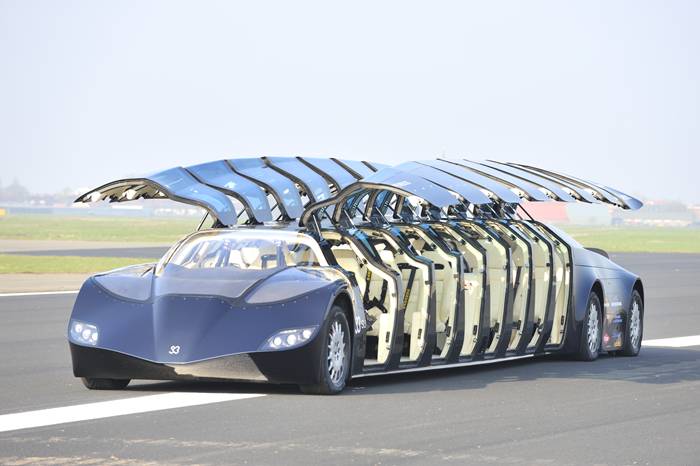
Superbus Wubbo Ockels

The first Superbus prototype, designed by former astronaut Wubbo Ockels and his team, is loaded into a KLM cargo plane at Schiphol airport, Amsterdam. The Superbus prototype will be presented in Dubai at the International Association of Public Transport exhibition. The electric Superbus is said to reach a speed of up to 250 kilometres per hour with up to 23 people on board.

The first Superbus prototype, designed by former astronaut Wubbo Ockels and his team, is loaded into a KLM cargo plane at Schiphol airport, Amsterdam. The Superbus prototype will be presented in Dubai at the International Association of Public Transport exhibition. The electric Superbus is said to reach a speed of up to 250 kilometres per hour with up to 23 people on board. 


The first Superbus prototype, designed by former astronaut Wubbo Ockels and his team, is loaded into a KLM cargo plane at Schiphol airport, Amsterdam. The Superbus prototype will be presented in Dubai at the International Association of Public Transport exhibition. The electric Superbus is said to reach a speed of up to 250 kilometres per hour with up to 23 people on board.

The first Superbus prototype, designed by former astronaut Wubbo Ockels and his team, is loaded into a KLM cargo plane at Schiphol airport, Amsterdam. The Superbus prototype will be presented in Dubai at the International Association of Public Transport exhibition. The electric Superbus is said to reach a speed of up to 250 kilometres per hour with up to 23 people on board.

The first Superbus prototype, designed by former astronaut Wubbo Ockels and his team, is loaded into a KLM cargo plane at Schiphol airport, Amsterdam. The Superbus prototype will be presented in Dubai at the International Association of Public Transport exhibition. The electric Superbus is said to reach a speed of up to 250 kilometres per hour with up to 23 people on board.

The first Superbus prototype, designed by former astronaut Wubbo Ockels and his team, is loaded into a KLM cargo plane at Schiphol airport, Amsterdam. The Superbus prototype will be presented in Dubai at the International Association of Public Transport exhibition. The electric Superbus is said to reach a speed of up to 250 kilometres per hour with up to 23 people on board.

The first Superbus prototype, designed by former astronaut Wubbo Ockels and his team, is loaded into a KLM cargo plane at Schiphol airport, Amsterdam. The Superbus prototype will be presented in Dubai at the International Association of Public Transport exhibition. The electric Superbus is said to reach a speed of up to 250 kilometres per hour with up to 23 people on board.

The first Superbus prototype, designed by former astronaut Wubbo Ockels and his team, is loaded into a KLM cargo plane at Schiphol airport, Amsterdam. The Superbus prototype will be presented in Dubai at the International Association of Public Transport exhibition. The electric Superbus is said to reach a speed of up to 250 kilometres per hour with up to 23 people on board.

The first Superbus prototype, designed by former astronaut Wubbo Ockels and his team, is loaded into a KLM cargo plane at Schiphol airport, Amsterdam. The Superbus prototype will be presented in Dubai at the International Association of Public Transport exhibition. The electric Superbus is said to reach a speed of up to 250 kilometres per hour with up to 23 people on board.

The first Superbus prototype, designed by former astronaut Wubbo Ockels and his team, is loaded into a KLM cargo plane at Schiphol airport, Amsterdam. The Superbus prototype will be presented in Dubai at the International Association of Public Transport exhibition. The electric Superbus is said to reach a speed of up to 250 kilometres per hour with up to 23 people on board.

The first Superbus prototype, designed by former astronaut Wubbo Ockels and his team, is loaded into a KLM cargo plane at Schiphol airport, Amsterdam. The Superbus prototype will be presented in Dubai at the International Association of Public Transport exhibition. The electric Superbus is said to reach a speed of up to 250 kilometres per hour with up to 23 people on board.

The first Superbus prototype, designed by former astronaut Wubbo Ockels and his team, is loaded into a KLM cargo plane at Schiphol airport, Amsterdam. The Superbus prototype will be presented in Dubai at the International Association of Public Transport exhibition. The electric Superbus is said to reach a speed of up to 250 kilometres per hour with up to 23 people on board.
Text — Via

Thursday, 20 June 2013

Humans may be able to upload their brains to computers by 2045

Humans may be able to upload their brains to computers by as early as 2045, some futurists believe.

This notion formed the basis for the Global Future 2045 International Congress, a futuristic conference held in New York, last week.

The conference, which is the brainchild of Russian multimillionaire Dmitry Itskov, featured Ray Kurzweil – an inventor, futurist and now director of engineering at Google - who predicted that by 2045, technology will have surpassed human brainpower to create a kind of superintelligence an event known as the singularity.

Other scientists have said that robots will overtake humans by 2100, 'LiveScience' reported. According to Moore's law, computing power doubles approximately every two years. Several technologies are undergoing similar exponential advances, from genetic sequencing to 3D printing, Kurzweil told conference attendees.


By 2045, "based on conservative estimates of the amount of computation you need to functionally simulate a human brain, we'll be able to expand the scope of our intelligence a billion-fold," Kurzweil said.

Substantial achievements have already been made in the field of brain-computer interfaces, or BCIs (also called brain-machine interfaces).

Jose Carmena and Michel Maharbiz, electrical engineers at the University of California, Berkeley, are working to develop state-of-the-art motor BCIs.

These devices consist of pill-size electrode arrays that record neural signals from the brain's motor areas, which are then decoded by a computer and used to control a computer cursor or prosthetic limb (such as a robotic arm).

Theodore Berger, a neural engineer at the University of Southern California in Los Angeles, is taking BCIs to a new level by developing a memory prosthesis. Berger aims to replace part of the brain's hippocampus, the region that converts short-term memories into long-term ones, with a BCI.
The device records the electrical activity that encodes a simple short-term memory (such as pushing a button) and converts it to a digital signal. That signal is passed into a computer where it is mathematically transformed and then fed back into the brain, where it gets sealed in as a long-term memory.

Martine Rothblatt - a lawyer, author and entrepreneur, and CEO of biotech company United Therapeutics Corp introduced the concept of "mindclones" - digital versions of humans that can live forever - in the conference.

She described how the mind clones are created from a "mindfile," a sort of online repository of our personalities, which she argued humans already have (in the form of Facebook, for example). This mindfile would be run on 'mindware', a kind of software for consciousness.

Wednesday, 19 June 2013

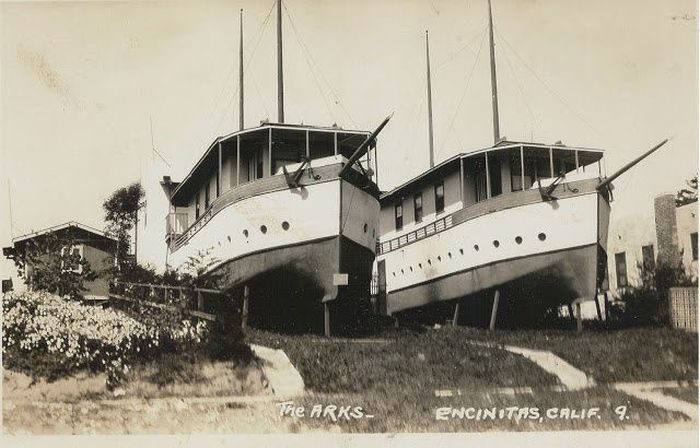
Homes built inside old ships !